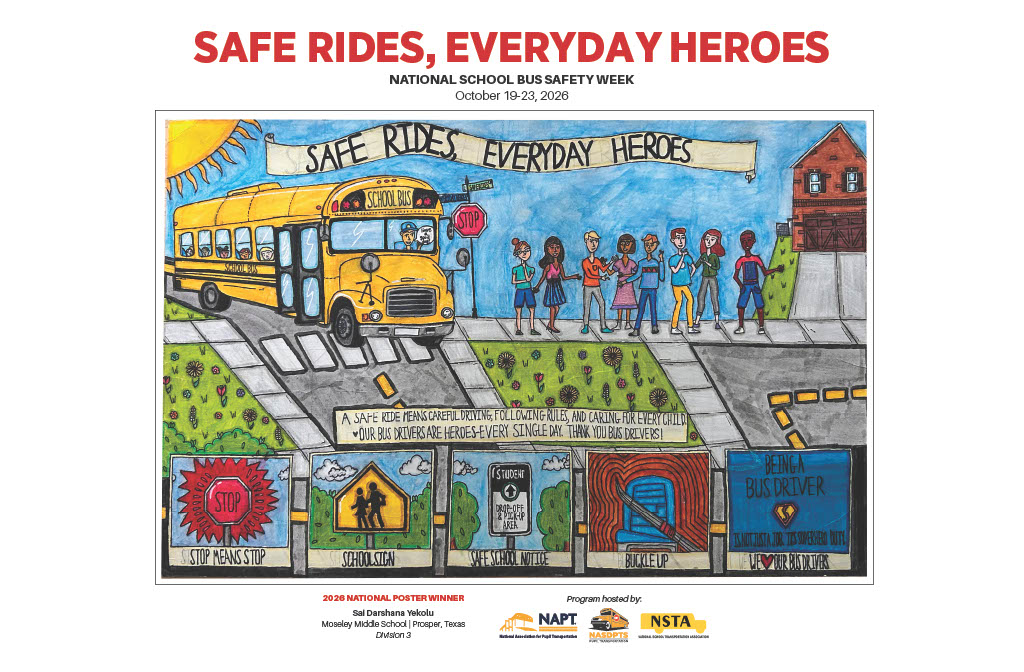
National School Bus Safety Week
National School Bus Safety Week Is October 19-23
Drivers Urged to Stop Illegal School Bus Passing
— National School Bus Safety Week is October 19-23, 2026. The U.S. Department of Transportation’s National Highway Traffic Safety Administration and Ottawa-Glandorf Local Schools are urging drivers to slow down around school buses and stop when the school bus stop-arms are out and the red lights are flashing. School buses are one of the safest modes of transportation. However, injuries and fatalities do occur outside of or near the buses. This is often caused by a motorist who has failed to slow down and obey the bus’s stop sign, or to follow local traffic laws, stopping is the law whether approaching from the front or rear of the school bus. Nationally, school bus passing is illegal, and it poses a deadly risk to bus riders, child pedestrians, and their caregivers. Drivers should always come to a complete stop when a school bus stop-arm is extended, and the red lights are flashing.
When a school bus’s red lights are flashing and the stop-arm is extended, drivers have a legal responsibility to slow down and come to a complete stop. This is not a suggestion — it’s the law. In fact, yellow flashing lights indicate the bus is preparing to stop to load or unload children. This is when motorists should begin to slow down and prepare to stop their vehicles. Motorists may begin moving only when the red flashing lights are turned off, the stop-arm is withdrawn, and the bus begins to move. School bus riders and their caretakers are relying on drivers to follow the law to keep them safe.
Respect the “Danger Zone”
The school bus loading and unloading area is called the “Danger Zone.” Specifically, this is any side of the bus where the bus driver can’t see the child and, therefore, the child is in the most danger while crossing the street. These areas include:
- 10 feet in front of the bus, where the driver may be sitting too high to see a child
- 10 feet on either side of the bus, where a child may be in the driver’s blind spot
- Behind the school bus
This is why all lanes should stop for school buses, check your state law to find out more. For more information about school bus safety, please visit NHTSA.gov/SchoolBus.